Fukagawa Don and Fukagawa Meshi
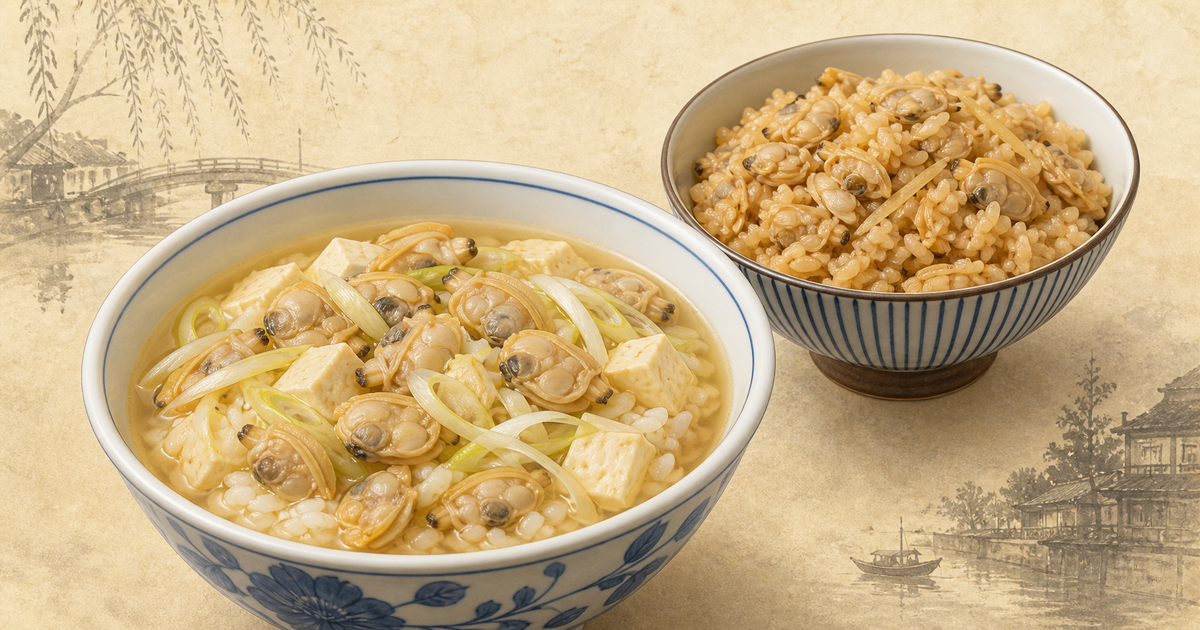
Fukagawa clam rice has two living forms: clams, leek and sometimes tofu in miso- or soy-seasoned broth poured over rice, and asari cooked directly with rice. Some shops call the poured bowl...
At a glance
| Name | Fukagawa Don and Fukagawa Meshi (Fukagawa Meshi) |
|---|---|
| Prefecture | Tokyo |
| Region | Kanto |
| Type | Old Tokyo clam rice in poured and cooked-rice styles |
What is it?
Fukagawa clam rice has two living forms: clams, leek and sometimes tofu in miso- or soy-seasoned broth poured over rice, and asari cooked directly with rice.
Some shops call the poured bowl Fukagawa don and the cooked version Fukagawa meshi, but naming varies. Neither is the sole authentic form.
History and local context
Koto's tourism association traces the practical poured meal to shellfish workers of old Fukagawa, while noting older clear-broth and other-clam forms.
Local fishing rights ended in 1962 as the shoreline changed; today's dishes preserve the fishing-town memory.
How to enjoy it
Ask which style is served. Cook clams thoroughly, discard any that remain closed or smell wrong, watch for shell fragments, and check shellfish allergy.
Availability varies by maker, season, and destination.
Sources and further reading
Frequently asked questions
Where is Fukagawa Don and Fukagawa Meshi from?
It is associated with Tokyo, in the Kanto region of Japan.
What kind of food is Fukagawa Don and Fukagawa Meshi?
This guide classifies it as old tokyo clam rice in poured and cooked-rice styles. See the overview for its defining ingredients and texture.
Can I order Fukagawa Don and Fukagawa Meshi online?
Use the Rakuten Japan search link on this page. Confirm the maker, ingredients, storage requirements, and international shipping before ordering.
Order from Japan
Search Rakuten Japan using the original Japanese food name. Search results and product pages may be available only in Japanese.
This section contains an advertising affiliate link to Rakuten Japan.