Anko Nabe: Winter Monkfish Hot Pot | Ibaraki
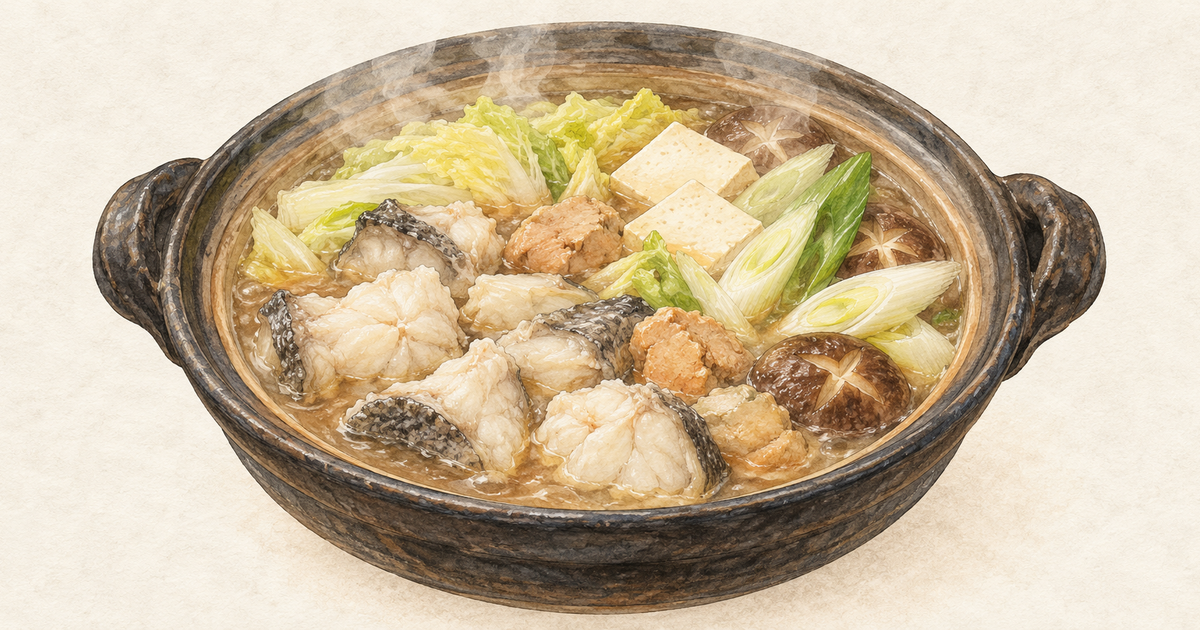
Ibaraki anko nabe simmers monkfish flesh, skin, liver and other edible parts with vegetables and tofu in miso- or soy-seasoned broth. The “seven tools” are liver, stomach, skin, fins, gills...
At a glance
| Name | Anko Nabe: Winter Monkfish Hot Pot | Ibaraki (Anko Nabe) |
|---|---|
| Prefecture | Ibaraki |
| Region | Kanto |
| Type | Miso- or soy-seasoned hot pot of monkfish parts, vegetables and tofu |
What is it?
Ibaraki anko nabe simmers monkfish flesh, skin, liver and other edible parts with vegetables and tofu in miso- or soy-seasoned broth.
The “seven tools” are liver, stomach, skin, fins, gills, ovaries and flesh. The parts in a serving vary by shop or product.
History and local context
Monkfish is known for tsurushi-giri, butchering the slippery fish while it hangs.
Dobu-jiru is a rich fishermen’s hot pot made by dry-frying the liver and simmering the fish and vegetables with little added water. Its concentrated liver flavor differs from a broth-based anko nabe.
How to enjoy it
Cook every piece through before comparing the springy skin, mild flesh and rich liver. Watch for bones and hard parts around the fins and gills.
At home, choose prepared hot-pot cuts. Follow the product’s storage, thawing and heating instructions, and keep utensils that touch raw fish separate from serving utensils.
Sources and further reading
Order from Japan
Search Rakuten Japan using the original Japanese food name. Search results and product pages may be available only in Japanese.
This section contains an advertising affiliate link to Rakuten Japan.