Imonoko-jiru: Yokote Taro, Chicken and Maitake Soup
Imonoko-jiru is an autumn taro, chicken and mushroom soup of southern Akita. In Yokote, taro is called imonoko; Sannai-grown taro is known for its soft, slightly resilient and sticky...
At a glance
| Name | Imonoko-jiru: Yokote Taro, Chicken and Maitake Soup (Imonoko-jiru) |
|---|---|
| Prefecture | Akita |
| Region | Hokkaido & Tohoku |
| Type | Autumn southern-Akita pot of taro offspring, chicken, mushrooms and seri |
What is it?
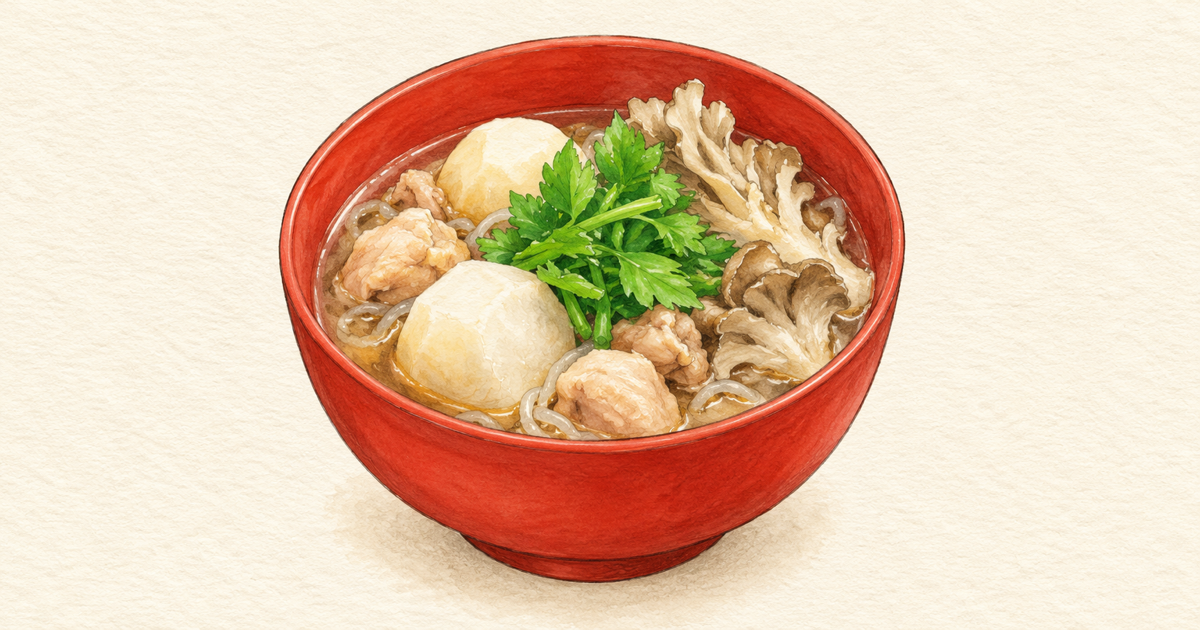
Imonoko-jiru is an autumn taro, chicken and mushroom soup of southern Akita. In Yokote, taro is called imonoko; Sannai-grown taro is known for its soft, slightly resilient and sticky texture. Maitake mushrooms and seri water dropwort add their aromas.
History and local context
Both miso and soy-sauce versions are found in Yokote. The city’s local-produce recipe uses miso, while Meiji’s recipe contributed by Yokote school-meal educators uses light soy sauce. Choosing by the named recipe makes the seasoning clear.
The harvest dish is associated with nabekko outdoor cooking excursions in local schools. Iwate also has imonoko-jiru: the Futago example uses chicken broth, tofu, shimeji and scallion, while Yokote recipes commonly combine chicken, maitake and seri.
How to enjoy it
For four servings of Meiji’s soy-seasoned version: taro about 400g, chicken thigh 80g, maitake 40g, thread konjac 60g, seri 40g, water 500ml, sake 1 teaspoon and light soy sauce 1½ tablespoons.
Peel the taro, halve it and start it in cold water in a separate pan; parboil until the center is tender. Tear the maitake into clusters, cut konjac to about 3cm and seri to about 1cm; cut large chicken pieces into bite-size portions.
Simmer the chicken in the measured 500ml water, then add the parboiled taro, maitake and konjac. Season with the sake and light soy sauce. Cook the chicken thoroughly; finish with seri and turn off the heat once the greens have lightly cooked.
Let hot taro cool slightly and check that its center is soft. Use separate utensils for raw chicken and ready-to-eat food, use reliably identified edible mushrooms, and refrigerate leftovers promptly in small containers. Raw taro can irritate skin; check soy and wheat in the seasonings.
Sources and further reading
Order from Japan
Search Rakuten Japan using the original Japanese food name. Search results and product pages may be available only in Japanese.
This section contains an advertising affiliate link to Rakuten Japan.