Nara Imobota: Rice-and-Taro Dumplings
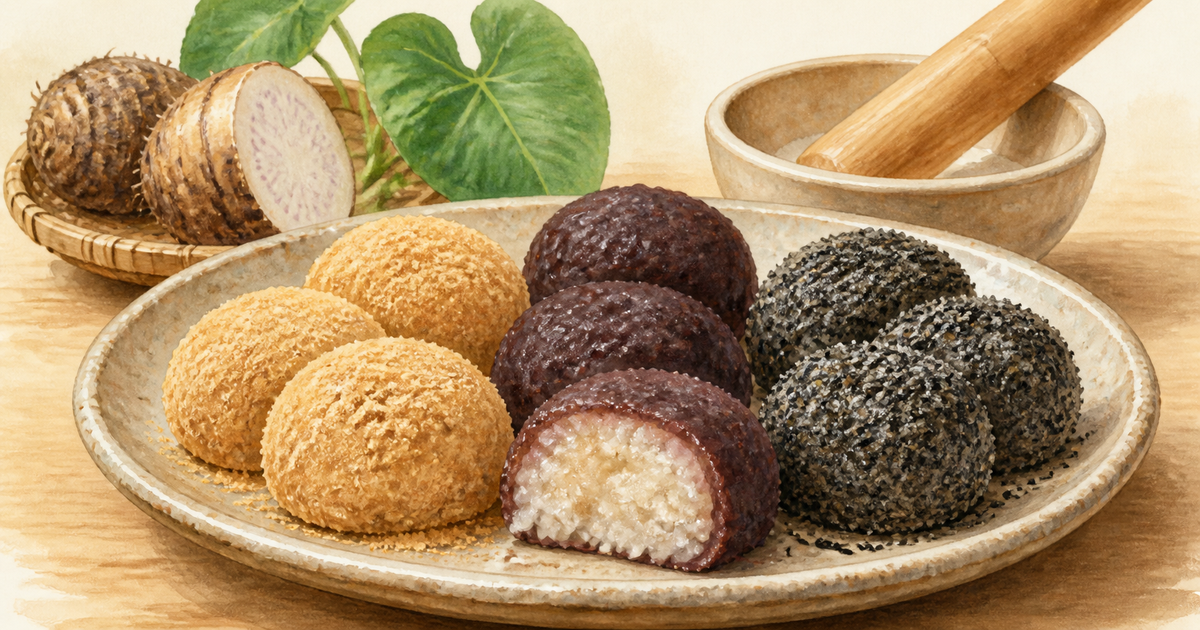
Nara imobota cooks rice with tubers and mashes them into small sticky dumplings; Ikoma uses taro with kinako or soybean coating. Tenkawa uses stored potato and Tottori uses sweet potato, so...
At a glance
| Name | Nara Imobota: Rice-and-Taro Dumplings (Imobota) |
|---|---|
| Prefecture | Nara |
| Region | Kansai |
| Type | Mashed rice and taro shaped like botamochi |
What is it?
Nara imobota cooks rice with tubers and mashes them into small sticky dumplings; Ikoma uses taro with kinako or soybean coating.
Tenkawa uses stored potato and Tottori uses sweet potato, so the tuber and grain ratio must remain regional.
History and local context
Ikoma links it to autumn offerings and the post-harvest celebration when mochi rice and azuki were costly.
Cut the sticky mass small, chew well and check soybean, nut-name and actual allergen ingredients.
How to enjoy it
Coat a small piece lightly with kinako, bean paste or sesame and chew it thoroughly.
Availability varies by maker, season, and destination.
Sources and further reading
Frequently asked questions
Where is Nara Imobota: Rice-and-Taro Dumplings from?
It is associated with Nara, in the Kansai region of Japan.
What kind of food is Nara Imobota: Rice-and-Taro Dumplings?
This guide classifies it as mashed rice and taro shaped like botamochi. See the overview for its defining ingredients and texture.
Can I order Nara Imobota: Rice-and-Taro Dumplings online?
Use the Rakuten Japan search link on this page. Confirm the maker, ingredients, storage requirements, and international shipping before ordering.
Order from Japan
Search Rakuten Japan using the original Japanese food name. Search results and product pages may be available only in Japanese.
This section contains an advertising affiliate link to Rakuten Japan.